

Anna M Agathangelou
Anna M Agathangelou teaches in the areas of international relations and women and politics. Some of her areas of expertise are time and temporality in global politics, the body, time and ecology, international feminist political economy and feminist/postcolonial and decolonial thought. She is the co-director of Global Change Institute, Cyprus and was a visiting fellow in the Program of Science, Technology and Society at John F. Kennedy School of Government, Harvard (2014-2015). She is currently involved on two multinational SSHRC partnership research projects focusing on sexual violence and human security, global governance, and biotechnology. She has researched ethnic conflict in Cyprus, as well as reconstruction in post-conflict societies with a focus on sexual violence, displaced peoples and the missing.
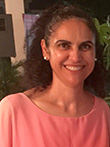

Aziza Ahmed
Aziza Ahmed is a professor at Boston University School of Law whose scholarship examines the intersection of law, politics, and science across constitutional, criminal, health, and family law. Previously at UC Irvine and Northeastern law schools, she has held visiting positions at University of Chicago, Harvard Law School (as Bennett Boskey Visiting Professor), and Princeton University as a Law and Public Affairs fellow. Her research has been published in leading journals including the University of Miami Law Review, American Journal of Law and Medicine, and Boston University Law Review. Ahmed is the author of the forthcoming Risk and Resistance: How Feminists Transformed the Law and Science of AIDS (Cambridge University Press) and co-editor of Race, Racism, and the Law (Edward Elgar) and The Routledge Companion on Gender and COVID-19. Before academia, she worked as a research associate at Harvard School of Public Health’s Program on International Health and Human Rights and served on the UN Development Programme’s Technical Advisory Group on HIV and the Law. She holds a BA from Emory University, JD from UC Berkeley School of Law, and MS in Population and International Health from Harvard School of Public Health.
Nicole West Bassoff
Nicole West Bassoff is a postdoctoral research fellow at the Digital Technology for Democracy Lab at the University of Virginia. She studies the politics of digital transformations at urban scales.
West Bassoff is trained in the field of science, technology, and society (STS) and holds a PhD in public policy (Harvard University), an MPhil in history and philosophy of science (University of Cambridge) and an A.B. in history and science (Harvard University). Her work sits at the intersection of STS, urbanism and public policy. She takes a comparative approach to the study of technology policy with a focus on the role of cities and urban politics in the democratic governance of digitization. Her doctoral dissertation examined public controversies surrounding smart city projects in the United States and she is currently developing a cross-national comparative project about the local political frictions produced by the construction of data centers and other resource-intensive infrastructures of the global data economy.
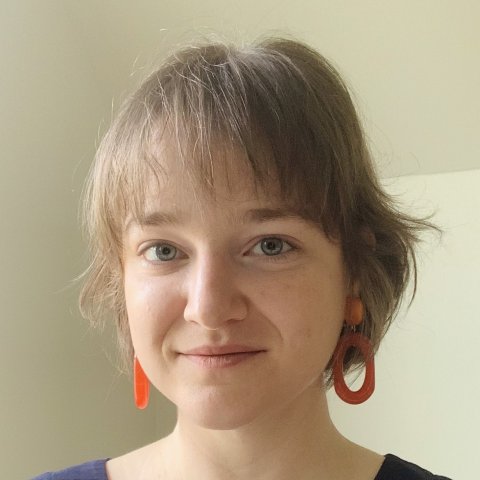
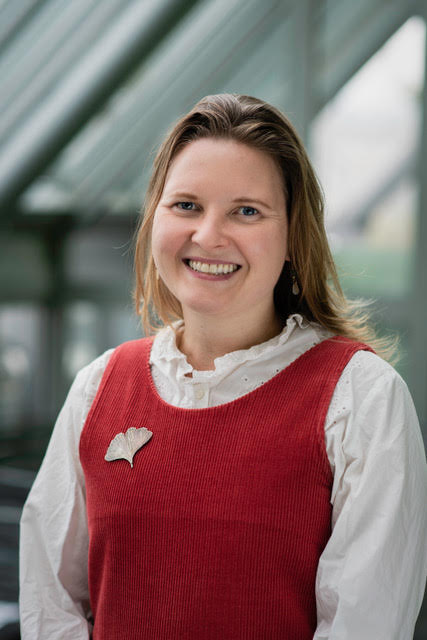
Margo Boenig-Liptsin
Margarita (Margo) Boenig-Liptsin is Assistant Professor of Ethics, Technology and Society at ETH Zürich. Boenig-Liptsin is trained in the field of Science and Technology Studies and has a PhD in History of Science (Harvard University) and in Philosophy (Université Paris 1-Sorbonne). Her research examines transformations to human identity, citizenship, and ethics in relation to information technologies across time and cultures.
Gabriel Dorthe
Gabriel Dorthe is a senior scientific assistant at ETH Zurich. He has held postdoctoral research and teaching positions at Harvard STS, RIFS Potsdam, and Lille Catholic University. He holds a Ph.D. in philosophy from Université Paris I Panthéon-Sorbonne and a Ph.D. in environmental humanities from the University of Lausanne. His work focuses on the engagement of (self-)marginalized groups with emerging technologies and scientific expertise, including conspiracy theories, transhumanism, ecoanxiety, and scientists’ civil disobedience. He employs ethnographic methods, combining theoretical elaboration with thorough empirical fieldwork.
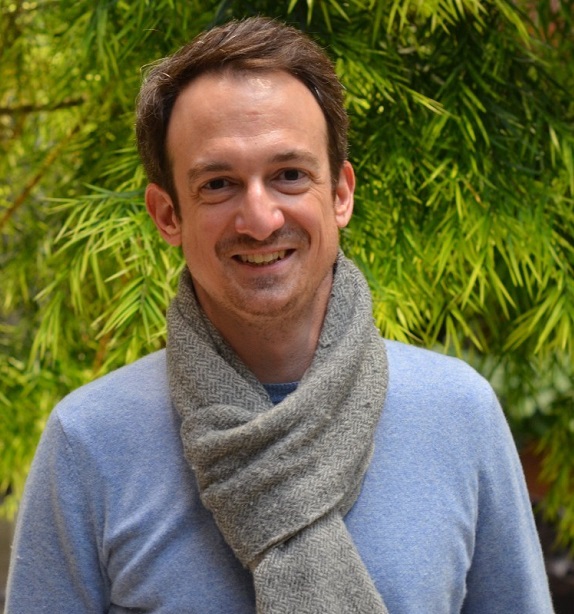
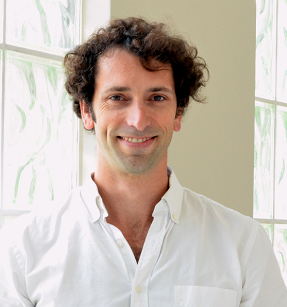
J. Benjamin Hurlbut
J. Benjamin Hurlbut, PhD is Associate Professor in the School of Life Sciences at Arizona State University. He is trained in science and technology studies (STS) with a focus on the history of the modern biomedical and life sciences, and his research lies at the intersection of STS, bioethics and political theory. He studies the changing relationships between science, politics and law in the governance of biomedical research and innovation, examining the interplay of science and technology with democracy, religious and moral pluralism, and public reason. He is the author of Experiments in Democracy: Human Embryo Research and the Politics of Bioethics (Columbia University Press, 2017) and co-editor of Perfecting Human Futures: Transhuman Visions and Technological Imaginations, (Dordrecht: Springer, 2016), as well as numerous articles and book chapters.
Sheila Jasanoff
Sheila Jasanoff is Pforzheimer Professor of Science and Technology Studies at the John F. Kennedy School of Government at Harvard University. Previously, she was Professor of Science Policy and Law at Cornell University and founding chair of Cornell’s Department of Science and Technology Studies. At Harvard, she founded and directs the Kennedy School’s Program on Science, Technology and Society (STS). In 2002, she founded the Science and Democracy Network, an international community of STS scholars dedicated to improving scholarly understanding of the relationships among science, technology, law, and political power. Jasanoff has been a pioneer in building the field of Science and Technology Studies (STS) and shaping its research trajectories. Her writings on law and science, risk management, the comparative politics of regulation, and science in environmental decisionmaking count as basic texts in these fields.

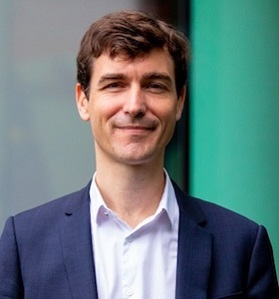
Brice Laurent
Brice Laurent is senior researcher at the Center for the Sociology of Innovation at Mines Paris and director of the Social Sciences, Economics & Society Department at ANSES, the French public health and safety agency. Brice Laurent’s research focuses on the relationships between innovation and democracy. Since 2023, he has been coordinating a research program on mineral resources and the politics of anticipation. At ANSES, the department he heads is in charge of socioeconomic analysis and dialogue with the agency’s stakeholders. To do so, it develops methods and approaches for integrating social sciences and humanities in public expertise about risks. Brice Laurent has published on emerging technologies and the democratic issues they raise, the politics of regulation and expertise, and the politics of experiments. His books include Democratic Experiments (MIT Press, 2017) and European Objects (MIT Press, 2022). With Sebastian Pfotenhauer, he is the editor of the Handbook of Living Labs and Real-world Experiments, forthcoming at Edward Elgar.
Søren Riis
Søren Riis is dr. phil. and holds a PhD from Albert-Ludwigs-Universität Freiburg, Germany. Riis has a broad interest in philosophical thinking and integrates continental philosophy, philosophy of technology with Science and Technology Studies (STS) and is interested in inquiring a wide variety of modern artifacts, their consequences and different modes of being. He has published in Continental Philosophy Review, Social Studies of Science, Foundation of Science, Heidegger-Jahrbuch, and has co-authored the Oxford Bibliographies Online entry on philosophy of technology. Riis is a board member of The Society of Philosophy in Denmark, Danish STS (DASTS) and also works on the editorial board of the Springer journal Philosophy and Technology. Riis has been a visiting scholar a Harvard University, École Polytechnique in Paris, Exeter University, Stony Brook University, and DAAD-research fellow at Rio de Janeiro State University.
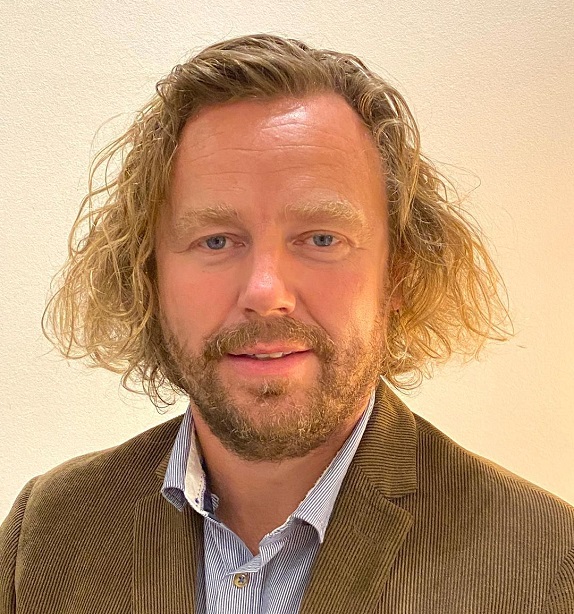
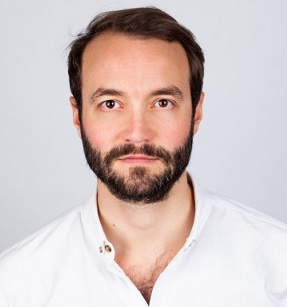
Stefan Schäfer
Stefan Schäfer is a research group leader at the Research Institute for Sustainability – Helmholtz Centre Potsdam and a fellow at Harvard University and the University of Oxford. His research draws on approaches from science and technology studies to examine the political, ethical, and epistemological dimensions of new planetary sciences and technologies. He teaches at Humboldt University Berlin, where he is affiliated with the Integrative Research Institute on Transformations of Human-Environment Systems.
After studying political science, philosophy, and history at the University of Tübingen and Cornell University, Stefan received his PhD in international relations from Freie Universität Berlin. He was a guest researcher at the Berlin Social Science Center (WZB) from 2009-2012, a fellow of the Robert Bosch Foundation in 2014-2015, an Oxford Martin Visiting Fellow at the University of Oxford’s Institute for Science, Innovation and Society in 2017, a Visiting Fellow in Harvard University’s Program on Science, Technology and Society in 2018, and a Guest Professor in the University of Vienna’s Department of Science and Technology Studies in 2020. His work has been published widely in highly ranked peer reviewed journals as well as in numerous edited volumes and as working papers, commentaries, and assessment reports. Stefan is a contributing author to the IPCC’s Fifth Assessment Report and was appointed Special Adviser to the European Commissioner for Transport in 2018-19. In addition to his work with the research group at RIFS, he is a founding member of research-based art collective LiCo, with which he co-produces films, essays, and installations that examine past and future choreographies of mental and environmental life.
Hilton Simmet
Hilton Simmet is a Research Associate at the Research Institute for Sustainability and affiliate of the Program on Science, Technology and Society at Harvard Kennedy School. Hilton studied social theory and physics (A.B.) at Harvard College and political theory (M.A.) at Yale University. In 2025, he completed his Ph.D. in Public Policy at Harvard Kennedy School, where he specialized in Science and Technology Studies (STS) and development economics. Drawing on this training, Hilton explores the role that scientific and technical expertise play in developing solutions to problems of poverty, inequality and development. His dissertation analyzed how leading inequality economists in the US, France and India developed disparate research methods-randomized controlled trials (RCTs), distributional national accounts and “action-oriented” research-consistent with local understandings of justice and social welfare. At RIFS, Hilton is looking at the emergence of the “growth paradigm” in economic thought, and how technology has been conceived as a solution to the problem of planetary limits. He will also develop his ongoing research on the politics of the energy transition in Europe and the global South.

Melanie Smallman
Melanie Smallman is Professor of Science and Technology Studies and Director of Science Communication, in the Department of Science and Technology Studies. Melanie’s research looks at the role of science and innovation (particularly data-technologies and AI) in increasing inequality, and how the social impacts of these technologies can be included in ethical and policy considerations – research that was recently profiled in an article in Nature. She grew up in South Wales and was the first person in her family to go to University.
Melanie was formerly Co-Director of UCL’s UCL’s Responsible Research and Innovation Hub, putting in place a programme of doctoral and professional training on RRI within UCL and beyond, and is the founder & Director of the UK’s first science communication consultancy, Think-Lab. Through this, she has more than 20 years experience as a science communication professional and has led a number of innovative science communication and science policy projects, including seven years as a communications advisor to Defra’s Chief Scientific Adviser, tasked with rebuilding public confidence in Defra’s use of science in the aftermath of BSE and foot and mouth disease. She also helped establish the International Falling Walls Engage competition to find the world’s best public engagement project, and currently chairs the judging jury.
Makoto Takahashi
Makoto Takahashi is the Executive Director of the McQuillan Institute for Science, Technology and the Human Future and an STS scholar whose core interests lie in how societies come to understand novel risks and how they decide who can credibly inform policy. He received his BA, MPhil, and PhD from the University of Cambridge, writing his thesis on how expert authority is claimed and contested in conditions of low public trust. This project drew upon extensive ethnographic fieldwork, conducted in Japan following the 2011 Fukushima Daiichi nuclear power plant disaster, and won the American Association of Geographers’ Jacques May Thesis Prize. Following his PhD, Makoto accepted a Lectureship at the Technical University of Munich’s (TUM) Department for STS and was a Fulbright Lloyds Fellow at Harvard University, before moving to Vrije Universiteit Amsterdam as Assistant Professor of Transdiciplinary STS. He has held Visiting Fellowships at Waseda University and Aarhus University, as well as a Science and Technology Studies (STS) Fellowship at Harvard University (2019). He is the curator of the Picturing the Invisible exhibition, which won the 2022 Ziman Award from EASST.

Instructors and faculty really cared about interacting with students. Many senior scholars were present throughout the entire week and took students’ ideas and thoughts very seriously. Everyone was easy to approach and status differences were leveled to an extent I had not imagined to be possible before coming here.
– 2022 Participant